
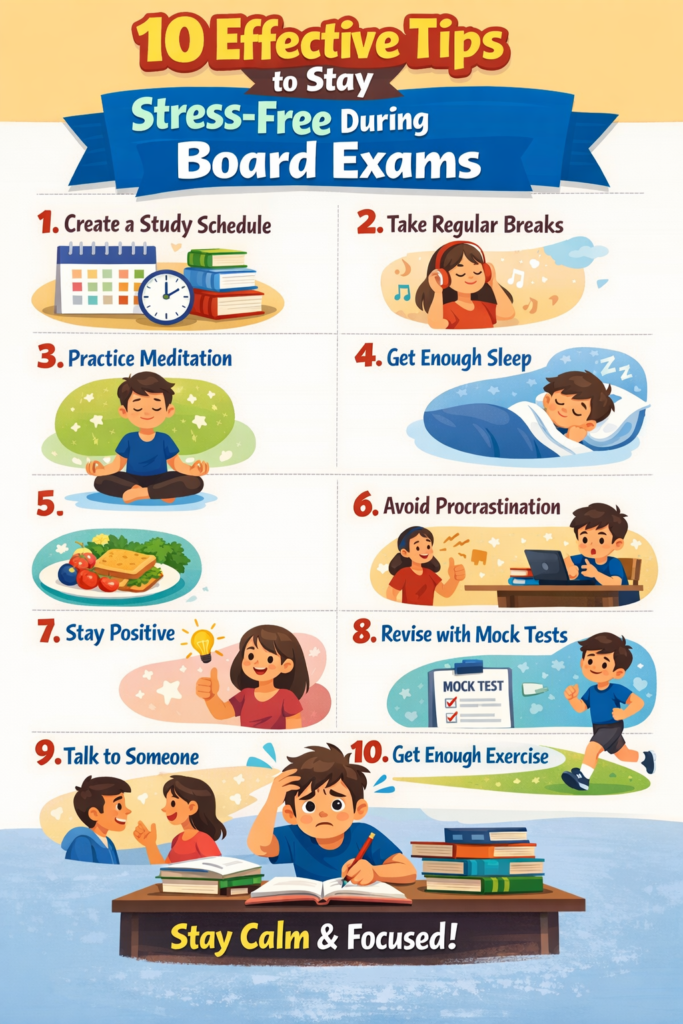
Board exams are one of the most important academic milestones in a student’s life. Whether it is Class 10 or Class 12, board exams often bring pressure, fear of failure, and stress. Expectations from parents, teachers, and even from oneself can feel overwhelming. However, stress does not help performance—smart planning and a positive mindset do. With the right strategies, students can stay calm, confident, and focused during board exam preparation. Here are 10 effective and practical tips to stay stress-free during board exams.
- Create a Realistic Study Timetable
A well-planned study schedule is the foundation of stress-free exam preparation. Divide the entire syllabus into smaller, manageable portions and assign specific topics to each day. Avoid cramming everything at the last moment. A realistic timetable helps students stay organized, reduces anxiety, and builds confidence. Make sure to include time for revision, breaks, sleep, and relaxation.
- Focus on Understanding Concepts
One of the biggest reasons for exam stress is rote learning. Memorizing without understanding leads to confusion and fear during exams. Instead, focus on understanding concepts clearly, especially in subjects like Mathematics, Science, and Economics. When concepts are clear, revision becomes easier and students feel more confident while writing answers.
- Revise Regularly
Regular revision is key to long-term memory retention. Revise topics weekly or after completing each chapter. This prevents forgetting and reduces last-minute stress. Make short notes, mind maps, or flashcards for quick revision. Consistent revision helps students feel prepared and reduces exam fear.
- Practice Previous Year Question Papers
Solving previous year board exam question papers is one of the most effective ways to reduce stress. It helps students understand the exam pattern, marking scheme, and frequently asked questions. Practicing sample papers also improves time management and boosts confidence. The more familiar you are with the exam format, the less anxious you will feel.
- Take Regular Short Breaks
Studying continuously for long hours can lead to mental fatigue and stress. Follow techniques like the Pomodoro method—study for 25–30 minutes and take a 5-minute break. Short breaks refresh the brain, improve concentration, and prevent burnout. Use breaks to stretch, relax, or take deep breaths.
- Maintain a Healthy Sleep Routine
Many students sacrifice sleep during board exams, but this increases stress and reduces focus. Getting 7–8 hours of proper sleep is essential for memory, concentration, and emotional balance. A well-rested mind performs better during exams and helps students stay calm and alert.
- Eat Healthy and Stay Hydrated
A balanced diet plays a crucial role in managing exam stress. Avoid junk food, excessive caffeine, and sugary snacks. Instead, include fruits, vegetables, nuts, whole grains, and plenty of water in your daily routine. Healthy food keeps the brain energized and improves concentration.
- Practice Meditation and Deep Breathing
Meditation, yoga, and deep breathing exercises are powerful tools to reduce stress and anxiety. Just 10–15 minutes a day can calm the mind, improve focus, and increase emotional stability. These practices are especially helpful before study sessions or exams.
- Avoid Comparing Yourself with Others
Comparing preparation levels, marks, or study hours with classmates creates unnecessary pressure. Every student has a different learning style and pace. Focus on your own progress and improvement. Self-comparison is healthy; comparison with others is stressful.
- Stay Positive and Believe in Yourself
A positive mindset can make a huge difference during board exams. Replace negative thoughts like “I can’t do this” with positive affirmations such as “I am prepared” and “I will do my best.” Believe in your hard work and stay confident. Remember, board exams are important, but they do not define your entire future.
Conclusion
Board exams are a test of knowledge, not a test of mental strength. Staying stress-free helps students perform better and enjoy the learning process. With proper planning, healthy habits, and a positive attitude, students can face board exams with confidence and calmness. Trust your preparation, take care of your health, and give your best effort—success will follow.